



At just $0.10 per million input tokens, Claude Haiku 5.5 redefines what it costs to build scaled AI applications. Released by Anthropic in October 2026, this budget-friendly model brings a massive 1 million token context window and native reasoning capabilities.
Developers have long treated the Haiku tier as a simple text parser, but this latest iteration challenges that assumption. With impressive benchmark scores and new controls over computation effort, it is rapidly becoming the default engine for background agents.
Quick Answer
Claude Haiku 5.5 is Anthropic's fastest and most cost-effective AI model, released on October 7, 2026. It features a massive 1 million token context window, multimodality for text and image inputs, and native effort controls for reasoning. It is highly optimized for developers building automated subagents, analyzing large datasets, and running high-volume classification tasks on a tight budget.
Key Takeaways
- Input pricing starts at an incredibly low $0.10 per 1M tokens.
- The context window expanded to 1 million tokens for massive document processing.
- Features built-in reasoning with adjustable settings ranging from low to max.
- Accepts both text and image inputs while generating text outputs.
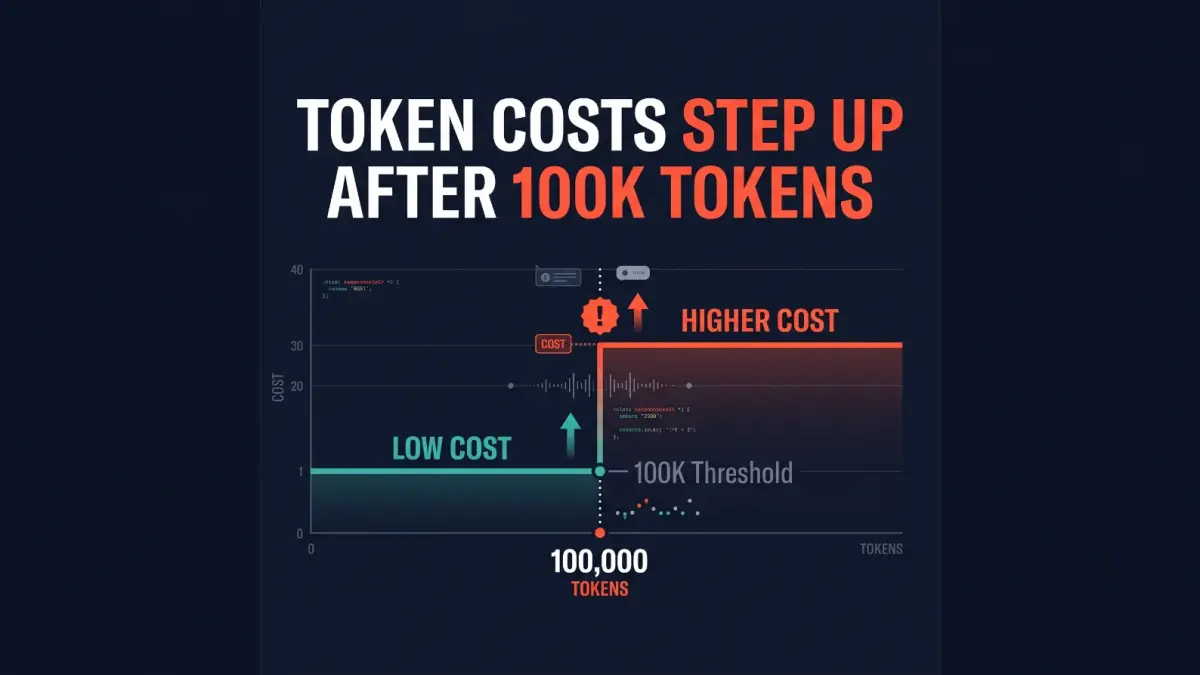
- API costs increase 5x for context payloads over 100,000 tokens.
Key Details
| Tool & Developer | Claude Haiku 5.5 by Anthropic |
|---|---|
| Best For | High-volume automated workflows and subagents |
| Free Plan | No (API usage is strictly pay-as-you-go) |
| Starting Price | $0.10 input / $0.50 output per 1M tokens (at the time of writing) |
| Platforms | API, Anthropic Console, major cloud providers |
| Standout Feature | 1M token context window with adjustable reasoning |
| Official Site | anthropic.com |
What Makes Claude Haiku 5.5 Different?
The most significant upgrade in this version is the context window. Anthropic expanded it to 1 million tokens, up substantially from the 200k limit found in Claude 4.5 Haiku. This allows applications to ingest entire codebases, massive log files, or dozens of legal documents in a single prompt.
Another major shift is how the model handles reasoning. In older budget models, you simply sent a prompt and got a fast, unthinking response. Claude Haiku 5.5 introduces reasoning effort controls, meaning you cannot completely disable its thinking process. By default, the model operates on a "medium" effort setting, but developers can manually adjust it to "low," "high," or "max" depending on the task's complexity.
Beyond text, the model retains strong multimodal capabilities. It natively accepts both text and image inputs, outputting structured text responses. This makes it highly effective for OCR tasks or visually parsing user-uploaded receipts and screenshots.
Pricing Breakdown: How Cheap Is It Actually?
Anthropic aggressively priced this model to dominate high-volume enterprise workloads, but there is a catch regarding context length.
If your prompt payload stays under 100,000 tokens, the pricing is remarkably cheap: $0.10 per 1 million input tokens and $0.50 per 1 million output tokens.
However, once a single request crosses the 100k token threshold, the cost jumps 5x. Heavy prompts will cost $0.50 per 1 million input tokens and $2.50 per 1 million output tokens.
To mitigate these costs, Anthropic offers prompt caching. For payloads under 100k tokens, cache reads cost a mere $0.01 per million tokens, while writing to the 5-minute cache costs $0.125.
Which model should you pick?
- Pick Haiku 5.5: For routing, data classification, and high-volume background tasks.
- Pick Sonnet: For writing complex application code or nuanced creative content.
The Power of Subagents and Automation
Because Claude Haiku 5.5 is extremely fast and cheap, it excels at operating invisibly in the background. Modern AI applications rarely rely on a single, massive prompt sent to an expensive model.
Instead, developers build systems where smaller subagents handle prep work. For example, when a user asks a complex question in a customer support app, a Haiku 5.5 agent can instantly classify the intent, extract relevant account numbers, and route the query to the correct database.
It formats the retrieved data and passes it up the chain. Only then does a larger, more expensive model step in to write the final, empathetic response to the customer. Using Haiku for these intermediate routing and extraction steps drastically reduces overall API bills.
Haiku 5.5 vs. Larger Models
You should not use a lightweight model for complex architectural coding or deep creative writing. If you ask it to build an entire React application from scratch, it will struggle compared to the heavier Sonnet tier.
However, its intelligence punches above its weight class. When pushed to its max effort setting, Claude Haiku 5.5 reached 1578 Elo on the AA-Briefcase benchmark. This places its raw knowledge work capabilities within the confidence intervals of much more expensive models from competitors.
The tradeoff is token consumption. When running on max effort, Haiku 5.5 consumes significantly more output tokens to generate its internal reasoning compared to standard models. You pay for the extra compute time to achieve those higher reasoning scores.
Who Should Build with Haiku 5.5?
Solo developers and startups building data-heavy pipelines will get the most value here. If you need to process thousands of customer reviews, summarize daily news feeds, or automatically tag images, this is the tool for the job.
It is also an excellent choice for moderation APIs. You can pass user-generated content through Haiku 5.5 with a strict system prompt to catch toxicity or spam before it ever hits your database, costing pennies per day.
The Final Verdict: Is It Right for You?
Claude Haiku 5.5 is a highly specialized tool designed for speed and scale. It forces developers to think carefully about their system architecture.
If you keep your context sizes small and utilize caching effectively, you will run complex AI workflows for a fraction of the cost of legacy models. Pair it strategically with heavier models when deep reasoning is required, and use Haiku as the tireless, low-cost engine running the rest of your app.
Frequently Asked Questions
When was Claude Haiku 5.5 released?
Does Claude Haiku 5.5 support image inputs?
How does the pricing change for long context prompts?
Can I turn off reasoning in Haiku 5.5?
How We Researched This & Why Trust Us: We analyzed Anthropic's official pricing documentation, release notes, and independent benchmark data from sources like Artificial Analysis (as of October 2026) to evaluate the real-world cost and performance of Claude Haiku 5.5 for developer workflows.




Comments (0)
No comments yet. Be the first!
Leave a Comment