

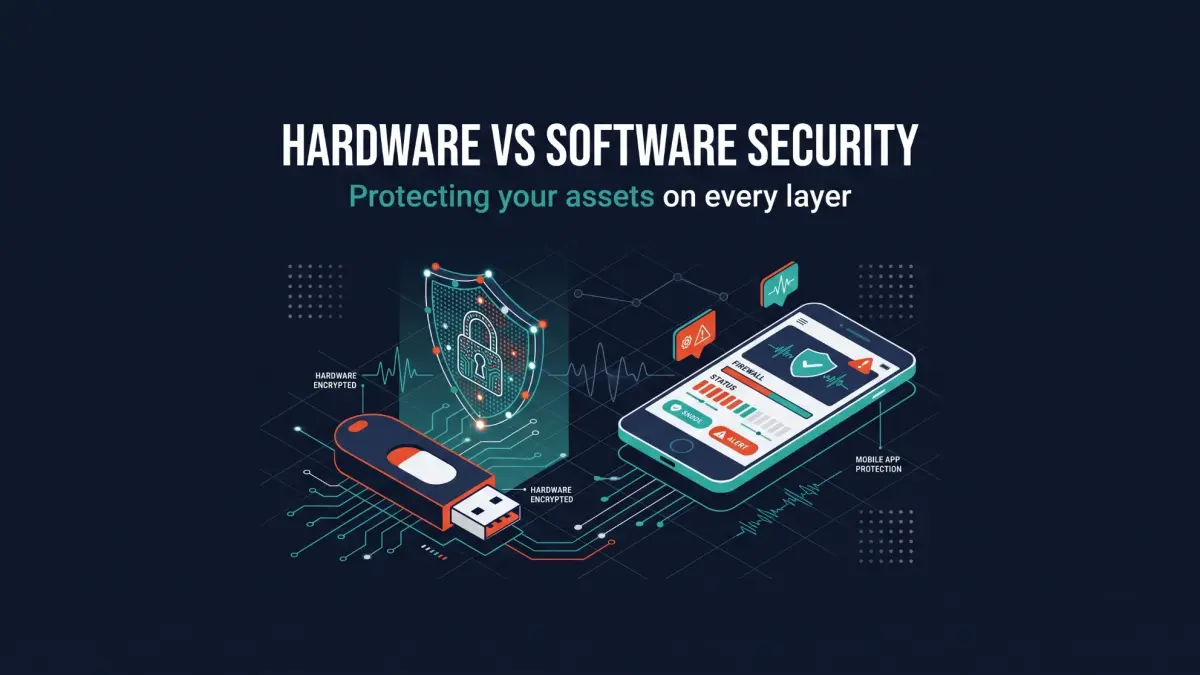

Hot wallets offer speed. Cold wallets offer security. Choosing how to manage your digital assets requires understanding exactly where your private keys live at any given moment.
If you are confused by the debate over hot vs cold crypto wallets, you are not alone. Many beginners assume that buying Bitcoin on a major exchange means they own it. In reality, until you take true self-custody of your assets, the exchange holds the keys.
Quick Answer
The main difference between hot vs cold crypto wallets is their internet connection. Hot wallets (like MetaMask or exchange accounts) are always connected to the internet, making them convenient for daily trading but vulnerable to hacks. Cold wallets (like a Ledger or Trezor device) keep your private keys entirely offline in a physical piece of hardware, providing maximum security for long-term storage.
Key Takeaways
- Hot wallets prioritize speed and convenience over maximum security.
- Cold wallets store your private keys offline on a physical device.
- Never store your seed phrase digitally; always write it on paper or metal.
- True self-custody means you control the private keys, not an exchange.
- Hardware wallets require physical approval for any outgoing transaction.
Key Details
| Product Category | Crypto Self-Custody Storage |
|---|---|
| Supported Networks | Bitcoin, Ethereum, Solana, and thousands more |
| Custody | Self-custody (You hold the private keys) |
| Setup Cost | Hot: Free / Cold: $50 to $200+ |
| Main Risk | Hot: Phishing attacks / Cold: Physical loss of the seed phrase |
| Best For | Hot: Daily trading / Cold: Long-term savings and large amounts |
The Core Difference: Internet Connection and Private Keys
A crypto wallet does not actually hold your digital coins. Your coins always live on the blockchain. What a wallet holds are your "private keys"—the cryptographic passwords that prove you own the assets and allow you to move them.
The entire debate around securing your digital assets boils down to one factor: is the device holding your private keys connected to the internet?
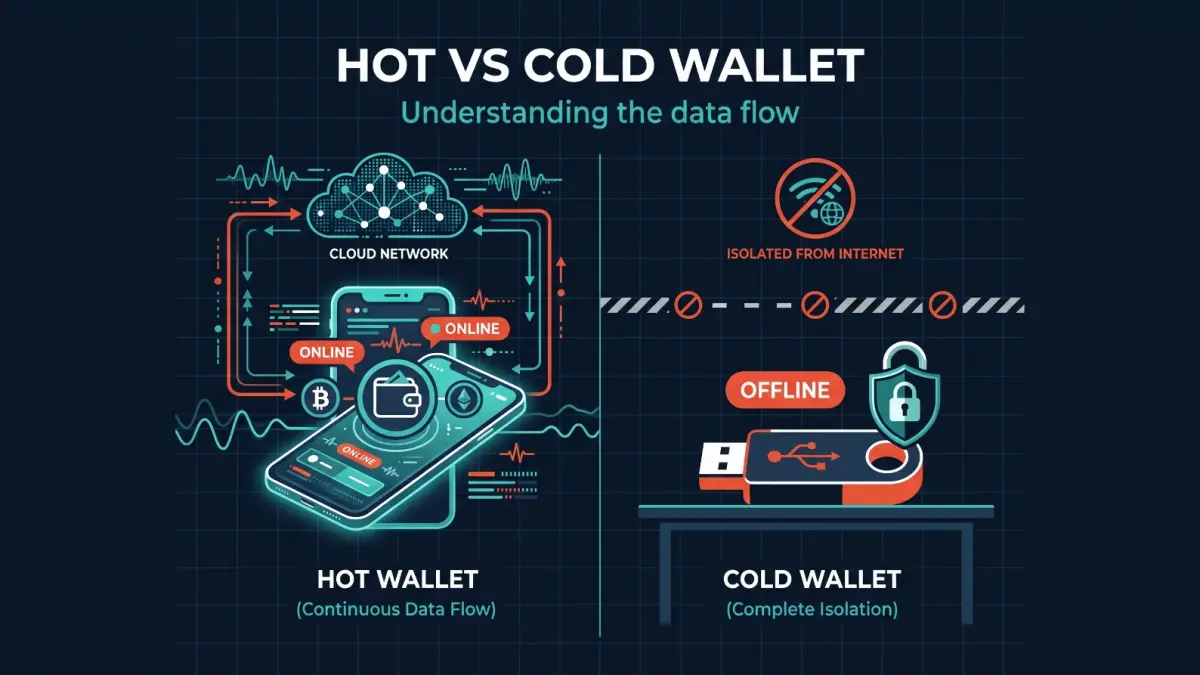
If the keys touch an active internet connection, it is a hot wallet. If the keys are generated and stored on a device that remains entirely offline, it is a cold wallet. This single distinction dictates the security level of your funds.
Hot Wallets: Best for Daily Trading and Convenience
Hot wallets are software applications. You can install them as browser extensions (like MetaMask or Phantom) or download them as mobile apps (like Trust Wallet). An exchange wallet provided by platforms like Coinbase or Binance is also a form of hot storage, though technically it is a custodial wallet because the company holds the keys, not you.
Because they are online, hot wallets make interacting with decentralized finance (DeFi), buying NFTs, or trading tokens incredibly fast.
However, convenience comes with risk. Since your device is online, malware, malicious smart contracts, or simple phishing links can potentially expose your private keys. If a hacker gains access to your phone or computer, they can drain a software wallet in seconds.
Cold Wallets: Best for Long-Term Safe Storage
Cold wallets take the form of physical hardware devices, often resembling a USB thumb drive. Popular brands include Ledger, Trezor, and Coldcard.
These devices generate your seed phrase offline. When you want to send crypto, you plug the device into your computer and use the manufacturer's software to initiate the transaction. The transaction is sent to the physical device, you manually press a button on the hardware to sign it, and only the signed transaction goes back to the computer.
The private keys never leave the device. Because of this isolated environment, offline hardware setups are immune to remote computer hacks. Even if your laptop is infected with a virus, the hacker cannot steal your crypto without physically pressing the button on your hardware wallet.
Side-by-Side Comparison: Hot vs Cold
| Feature | Hot Wallet (Software) | Cold Wallet (Hardware) |
|---|---|---|
| Internet Status | Always connected | Completely offline |
| Setup Cost | Free to download | $50 to $200+ to purchase |
| Transaction Speed | Instant | Slower (Requires physical device) |
| Security Level | Vulnerable to phishing and malware | Highly secure against remote hacks |
| Primary Use Case | Daily trading, DeFi, NFTs | Long-term holding, large balances |
How to Store Crypto Safely (Security Checklist)
Owning a cold wallet does not make you invincible. The weakest link in self-custody is usually human error. Follow this checklist to ensure your assets remain secure:
Self-Custody Checklist
- Never type your seed phrase into a computer or take a photo of it.
- Write your recovery phrase on physical paper or stamp it into metal.
- Store the physical backup in a fireproof safe or safety deposit box.
- Only buy hardware devices directly from the manufacturer, never from third-party resellers.
- Verify every transaction address carefully before pressing approve on your device.
If you click a malicious link and authorize a bad smart contract, you can still lose funds from a hardware device. Always double-check what you are signing when protecting against phishing attacks.
Which wallet is right for you?
- Pick a Hot Wallet: If you actively trade tokens every day and need quick access to decentralized apps.
- Pick a Cold Wallet: If you are holding thousands of dollars in Bitcoin or Ethereum for years and rarely need to move it.
Where We Landed
You do not have to choose just one. The smartest approach to storing cryptocurrency is to use both methods simultaneously.
Think of a hot wallet as the cash in your physical wallet—you keep a small amount there for daily purchases, trading, and interacting with apps. Think of a cold wallet as your bank vault. The vast majority of your long-term holdings should sit offline on a physical device, completely isolated from internet threats.
Take self-custody seriously, guard your seed phrase with your life, and never leave large sums of money sitting on an exchange.
Frequently Asked Questions
Which is safer, a hot or cold wallet?
Can a cold wallet be hacked?
What happens if I lose my physical hardware wallet?
Is keeping crypto on an exchange safe?
How We Researched This & Why Trust Us: We analyzed the security frameworks of both EVM-compatible software wallets and offline hardware signing devices (like Ledger and Trezor). We focused on standard cryptographic practices for self-custody and real-world vulnerabilities like phishing and malicious smart contracts to provide objective security advice.
Comments (0)
No comments yet. Be the first!
Leave a Comment