



As a 1099 contractor, mixing your personal groceries with your software subscriptions is a fast track to a tax season nightmare. Finding the best business bank accounts for US freelancers allows you to draw a clean line between your life and your business, making write-offs infinitely easier to track.
Many traditional brick-and-mortar banks charge hefty fees if you do not maintain a high balance, which is incredibly frustrating for someone just starting out. Thankfully, modern fintech platforms have created solutions tailored specifically to the gig economy, allowing you to start separating your finances instantly.
Quick Answer
The best business bank accounts for US freelancers are fintech platforms like Novo, Relay, and Bluevine. These institutions offer checking accounts with zero monthly maintenance fees, no minimum balance requirements, and built-in tools for invoicing and tax reserves. They are explicitly designed for a 1099 contractor or sole proprietorship looking to separate personal and business expenses without paying traditional corporate banking fees.
Key Takeaways
- Novo excels at software integrations and invoicing for solo workers.
- Relay allows you to open multiple accounts to organize tax savings.
- Bluevine offers high-yield interest on your working capital.
- Always choose an account that is FDIC insured through a partner bank.
- Avoid accounts that charge monthly maintenance or incoming wire fees.
Key Details
| Bank / App | Novo, Relay, Bluevine, Found, Lili |
|---|---|
| Available In | United States (SSN or EIN required) |
| Account Fees | $0 monthly maintenance fees (at the time of writing) |
| Transfer / FX Fees | Free standard ACH transfers; international wire fees vary |
| Regulated By / Deposit Protection | FDIC insured through partner banks |
| Best For | Independent contractors, sole proprietors, and single-member LLCs |
Do Freelancers Actually Need a Business Bank Account?
A common myth is that you only need a dedicated business account if you have formed an LLC. This is entirely false. Even if you operate as a sole proprietorship using your Social Security Number, opening a separate account is highly recommended by accountants.
When you audit-proof your business, the IRS wants to see a clear separation of funds. If an auditor sees personal dinners mixed with client payments, they can challenge your business deductions. Furthermore, having a card with your business name on it looks significantly more professional when paying vendors or receiving ACH transfers from major corporate clients.
If you are managing your 1099 contractor income properly, a dedicated checking account is step one.
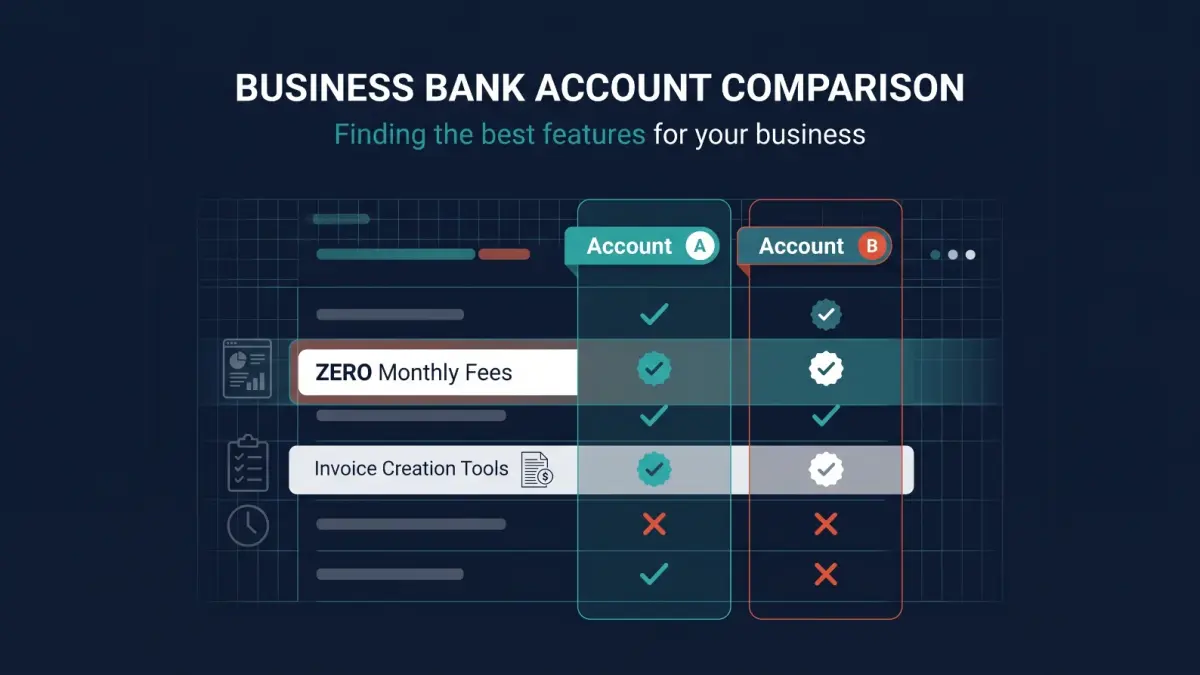
Quick Comparison of the Top Platforms
| Bank | Best Feature | Monthly Fee | Minimum Balance |
|---|---|---|---|
| Novo | Stripe & QuickBooks Integration | $0 | $0 |
| Relay | Up to 20 checking accounts | $0 | $0 |
| Bluevine | High-yield APY on balance | $0 | $0 |
| Found | Built-in tax estimates | $0 | $0 |
1. Novo — Best for Software Integrations
Novo is widely considered a top-tier choice for independent workers. It operates purely online (banking services provided by Middlesex Federal Savings, F.A.) and focuses heavily on integrating with the tools you already use, such as Stripe, Shopify, and QuickBooks.
What makes Novo stand out as the best bank for sole proprietors is its "Reserves" feature. You can allocate a percentage of your incoming payments directly into separate buckets for taxes or profit, keeping your main checking balance clean.
Pros:
- Refunds ATM fees nationwide.
- Offers free built-in invoicing tools.
- Excellent bookkeeping integrations.
Cons:
- No cash deposits (you must use money orders).
- Cannot send domestic wire transfers natively (relies on Wise integration).
2. Relay — Best for Multiple Checking Accounts
Relay (banking services provided by Thread Bank) is designed for freelancers who love granular organization. While most platforms give you one account, Relay lets you open up to 20 individual checking accounts for free.
This means you can adopt the "Profit First" accounting method—routing income into specific accounts for operating expenses, owner's pay, and tax reserves automatically.
Pros:
- Up to 20 separate accounts with zero fees.
- Issue up to 50 physical or virtual debit cards.
- Free incoming domestic wire fees.
Cons:
- Outgoing domestic wires cost $5 (at the time of writing).
- The app interface can feel slightly overwhelming for total beginners.
3. Bluevine — Best for Earning Interest
Most free checking accounts pay zero interest. Bluevine (banking services provided by Coastal Community Bank) breaks this rule by offering a high-yield APY on your checking balance, provided you meet specific activity requirements.
To earn the interest rate, you typically need to receive a certain amount of customer payments per month or spend a minimum on your debit card. If you keep thousands of dollars in your account to pay quarterly taxes, Bluevine lets that money grow.
Pros:
- High-yield interest on standard checking balances.
- Allows cash deposits at Green Dot locations (for a fee).
- Two free sub-accounts for organization.
Cons:
- Strict activity requirements to earn the advertised APY.
- Cash deposits cost $4.95 per transaction.
4. Found — Best for Built-in Bookkeeping
Found takes a different approach by combining banking, bookkeeping, and tax tools into one single app. Every time you swipe your debit card, the app prompts you to categorize the expense.
It also estimates your tax bill in real-time based on your incoming 1099 payments. If you hate spreadsheets and refuse to pay for separate accounting software, Found acts as an all-in-one safety net.
Hidden Fees to Watch Out For
When searching for a zero fee business bank account, always read the fine print. While the platforms listed above skip the monthly maintenance fees, banks have to make money somehow.
Always check the rules regarding minimum balance requirements. A bank might offer "free" checking only if you keep $1,500 in the account. Furthermore, look closely at domestic wire fees. While standard ACH transfers take a few days and are usually free, expediting a payment via wire can cost anywhere from $15 to $30 at traditional banks.
Which bank fits your freelance style?
- Pick Novo: If you use Stripe and need clean bookkeeping integrations.
- Pick Relay: If you use the Profit First method and need multiple checking accounts.
- Pick Bluevine: If you carry a high monthly balance and want to earn interest.
Where We Landed
Protecting your legal and financial liability starts with a clean financial ledger.
If you want an incredibly smooth app that plays nicely with Stripe and QuickBooks, open an account with Novo. If you obsess over budgeting and want 10 different accounts for different expenses, Relay is unbeatable. If you want to earn passive interest on your working capital, choose Bluevine.
By separating your funds now, you eliminate headaches during tax season and lay a solid foundation for scaling your freelance business.
Frequently Asked Questions
Do I need an EIN to open a business bank account?
Are these online fintech platforms safe to hold my money?
Can I deposit cash into an online business bank account?
What is the best bank for an independent contractor?
How We Researched This & Why Trust Us: We compared the fee structures, minimum balance rules, and integration features of top digital banking platforms available to sole proprietors. We focused specifically on zero-fee structures that benefit independent contractors rather than large corporations. Pricing and FDIC status were verified through official platform documentation at the time of writing.

Comments (0)
No comments yet. Be the first!
Leave a Comment