

Figuring out how to make passive income with Impact.com, a global partnership automation platform by Impact Tech, starts with understanding that you are essentially getting paid to connect your audience with products they already want to buy. The most effective way to earn is by integrating custom affiliate links into evergreen content—like blog posts or YouTube videos—that continues to get views long after you hit publish. When a viewer clicks your tracking link and makes a purchase, the platform automatically credits your account with a commission percentage, creating a hands-off revenue stream.
This guide covers everything a beginner needs to know, from navigating the initial dashboard and finding the right brands to generating your first deep link. We will also explain why most beginners fail to convert clicks into actual sales. Our analysis shows that success on this platform relies heavily on audience alignment; if you promote software to an audience that only cares about fashion, your conversion rate will sit at zero. This breakdown is designed for creators who already have a small but engaged audience and want to turn their influence into a reliable monthly paycheck without relying on unpredictable ad revenue.
Quick Answer
You can earn passive commissions by placing unique Impact.com tracking links inside evergreen content like YouTube videos or blog posts.
Success requires applying to brand partnerships that strictly align with your audience's demographics and specific interests.
Generating "deep links" that point directly to a product page converts significantly better than linking to a brand's generic homepage.
True passive income takes months of upfront work to build organic search traffic before the affiliate links start generating automated daily sales.
Key Takeaways
- Goal: Monetize content through automated affiliate commissions
- Time Needed: 3-6 months to build consistent organic traffic
- Difficulty: Beginner to Intermediate
- Tools Needed: Content platform (blog/YouTube) and an Impact.com account
- Cost: Free to join the network
- Expected Result: A scalable, recurring monthly income stream
The Reality of "Passive" Income in Affiliate Marketing
Before you start generating links, you need to set realistic expectations about the word "passive." True passive income requires building evergreen content assets that continuously drive traffic to your affiliate links over a long period. The income is passive, but the initial creation process is highly active.
If you paste an affiliate link on a temporary platform like an Instagram Story or an X (formerly Twitter) post, that link will disappear into the feed within 24 hours. You might get a quick burst of sales, but the income stops the moment the post loses visibility. To make the system truly automated, you must place your links in searchable content. For example, if you write a comprehensive review article or film a YouTube tutorial demonstrating the best AI script writing tools, people will search for that topic months or even years from now. Every time a new person finds your old post, clicks the link, and buys the software, you make money while you sleep.
Who this is for:
- YouTubers and bloggers who create searchable, educational, or review-based content.
- Newsletter writers who want to monetize their weekly tech or lifestyle recommendations.
- Social media influencers willing to build a centralized "link in bio" strategy to direct traffic.
Who should skip it:
- People looking for a get-rich-quick scheme without putting in the effort to create valuable content.
- Creators who do not have an audience yet; you need traffic to generate clicks.
Step 1: Finding the Right Brands for Your Audience
To succeed, you must apply to brands within the Impact.com marketplace that perfectly align with your specific niche and audience demographics. Promoting random, high-paying products that your viewers do not care about will ruin your credibility.
Once your creator account is approved, navigate to the "Brands" tab on the left side of your dashboard. Here, you will find thousands of companies spanning categories from financial software to outdoor gear. You can filter these brands by category, payout model, and approval rate. When you click on a brand, read their specific contract terms. Some brands pay a percentage of the total sale (Cost Per Action or CPA), while others pay a flat fee just for getting someone to sign up for a free trial (Cost Per Lead or CPL). According to Impact.com's official documentation at the time of writing, each brand maintains its own approval criteria, meaning they will review your website or social media presence before accepting you into their program.
When you apply, always use the platform's message box to introduce yourself. Tell the brand manager exactly how you plan to promote their product. A short note saying, "I run a tech blog with 10,000 monthly readers and plan to feature your software in a dedicated review," drastically improves your chances of approval compared to sending a blank application.
Step 2: Generating and Placing Your Affiliate Links
You generate deep links in the dashboard that point to specific product pages, rather than generic homepages, to reduce friction for the buyer. If you recommend a specific camera lens, your link should take the user directly to that exact lens.
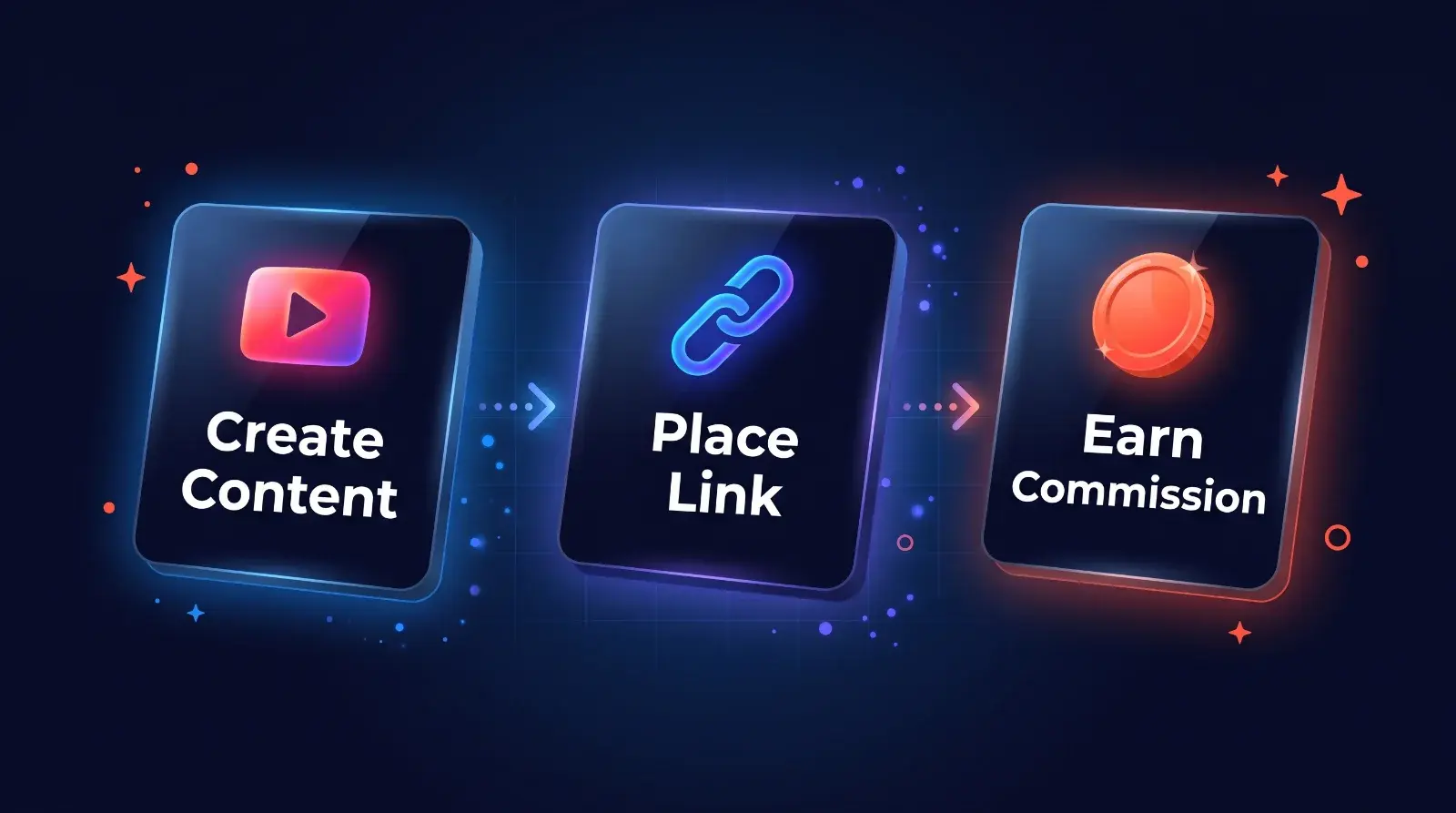
To do this, find the product you want to promote on the brand's actual website and copy the URL. Go back to your Impact.com dashboard, find the "Create a Link" widget (usually on the right side of the home screen), select the brand, and paste the URL. The system will instantly generate a unique tracking link tied to your account.
Placement is just as important as the link itself. In a blog post, embed the link naturally into the text using clear anchor text like "Check current pricing on Brand X." In a YouTube video, place the link in the top three lines of your description so viewers do not have to click "Show More" to find it.
Step 3: Understanding Cookie Windows and Metrics
You do not need an advanced degree in analytics to make money, but you do need to understand two primary concepts: cookie windows and EPC.
A "cookie window" is the amount of time you have to get credit for a sale after someone clicks your link. If a brand offers a 30-day cookie window, a user can click your link on a Tuesday, leave the site, and come back two weeks later to buy the product. You still get the full commission. Always look for brands that offer 30 to 90-day cookie windows.
EPC stands for "Earnings Per Click." It is a metric displayed on the dashboard that shows the average amount of money affiliates make every time someone clicks their link. According to industry standards at the time of writing, a high EPC generally indicates that the brand's website is highly optimized for converting visitors into buyers. If a brand pays a massive 50% commission but has a terrible EPC, it means their website is so confusing that nobody actually finishes the checkout process.
Which content format should you choose?
- If you want highly targeted traffic from people ready to buy, write a Blog Product Review.
- If you want to demonstrate a complex product visually to build deep trust, film a YouTube Tutorial.
Common Mistakes That Ruin Your Conversion Rates
Many beginners manage to get clicks but stare at a dashboard showing zero dollars in revenue. This usually happens because of a few easily avoidable mistakes.
- ✓ Failing to Disclose Affiliate Links: Transparency builds trust. If you try to hide the fact that you make a commission, your audience will feel tricked when they find out. Always include a clear disclaimer at the top of your posts or in your video descriptions.
- ✓ Linking to Out-of-Stock Items: If you review a specific laptop model and use a deep link to its product page, you must check that link periodically. If the brand stops selling that model, your link might lead to a 404 error page, guaranteeing zero sales.
- ✓ Overloading the Content: If you recommend 15 different software tools in a single paragraph, you overwhelm the reader. Decision fatigue sets in, and they will click nothing. Recommend one or two top options clearly and explain exactly why they are the best choices.
Pro Tip: Look for brands on the network that offer "Vanity Promo Codes." These are custom discount codes (like "YOURNAME20") that track sales back to you even if the user never clicks your actual affiliate link. They work incredibly well for podcast and video content.
The Bottom Line: How Long Does It Take to Earn?
Making passive income is a marathon, not a sprint. The strategy involves creating high-quality, searchable content that solves specific problems for your target audience. You then use the Impact.com platform to find premium brands that offer solutions to those exact problems. By generating deep links to specific products and understanding how cookie windows protect your commissions, you set up an automated system. It typically takes a beginner three to six months of consistent content creation before organic search engines start delivering the steady daily traffic required to generate reliable, hands-off revenue. Focus on building trust first, and the commissions will naturally follow.
Ready to start building your automated revenue stream? Create your free Impact.com creator account here and apply to your first brand today.
FAQ
Q2: How many followers do I need to get approved by brands?
A2: There is no strict follower minimum across the entire platform. Every brand sets its own rules. Some boutique brands approve creators with 1,000 highly engaged newsletter subscribers, while global tech brands might require tens of thousands of YouTube subscribers.
Q3: What is the difference between CPA and CPL?
A3: CPA stands for Cost Per Action, meaning you earn a percentage of the total cart value when someone buys a product. CPL stands for Cost Per Lead, meaning you earn a flat fee when someone completes a specific action, like signing up for a free trial or joining an email list.
Q4: Can I use Impact.com links on Instagram or TikTok?
A4: Yes, you can place links in your social media bios. However, because individual posts on these platforms do not allow clickable links, creators often use "link in bio" aggregator tools to house all their affiliate links in one place.
Q5: When do I actually get the money in my bank account?
A5: Affiliate marketing requires patience. Brands usually hold commissions in an "action locking" period for 30 to 60 days to ensure the customer does not return the product. Once the funds clear that locking period, the platform deposits them into your bank account.
How We Researched This & Why Trust Us: We outlined this beginner's strategy based on direct experience navigating the platform's dashboard, analyzing the official partnership documentation, and studying successful creator workflows. GoTrendWave focuses on factual, actionable guides to help independent creators monetize their platforms effectively. Platform features and metric definitions are accurate based on official company pages at the time of writing.
Comments (0)
No comments yet. Be the first!
Leave a Comment