

When evaluating NordVPN vs PureVPN, American users face a difficult choice between industry-leading performance and aggressive budget pricing. NordVPN, a cybersecurity product developed by Panama-based Nord Security, has dominated the commercial virtual private network space for years by offering consistently fast speeds and robust streaming capabilities. Conversely, PureVPN, operated by GZ Systems Ltd, has recently revamped its entire infrastructure, moving its headquarters to the privacy-friendly British Virgin Islands and drastically dropping its prices to capture the budget market. Both tools matter because American internet service providers (ISPs) legally monitor and throttle consumer traffic, making a reliable VPN an essential utility rather than a luxury.
Our analysis of their documented features, server networks, and independent security audits reveals that while both platforms encrypt your data effectively, their target audiences are completely different. NordVPN excels as a premium, all-in-one security suite that justifies its higher price tag through flawless Netflix unblocking and malware protection. Meanwhile, PureVPN sacrifices some specialized features to offer massive server variety at a fraction of the cost. This guide breaks down exactly how these two heavyweights compare across speed, security, streaming, and pricing to help you choose the exact provider that fits your browsing habits.
Quick Answer
NordVPN generally outperforms PureVPN in raw download speeds due to its proprietary NordLynx protocol.
Both providers successfully unblock major US streaming libraries like Netflix and Hulu, but NordVPN provides more consistent connections.
PureVPN offers significantly cheaper long-term subscription plans, making it the better choice for users on a strict budget.
NordVPN operates out of Panama while PureVPN is based in the British Virgin Islands, keeping both companies outside the invasive Five Eyes intelligence alliance.
Key Takeaways
- Provider: NordVPN & PureVPN
- Starting Price: Varies heavily based on promotional periods (PureVPN is typically lower)
- Renewal Price: Increases significantly after the initial term for both providers
- Key Features: Military-grade encryption, Kill switches, Split tunneling
- Money-Back Window: 30 days for NordVPN, 31 days for PureVPN
- Best For: NordVPN for speed/streaming; PureVPN for budget-conscious users
- Official Site: nordvpn.com and purevpn.com
Why Americans Need a Reliable VPN Right Now
The digital landscape in the United States is uniquely hostile to consumer privacy. Unlike the European Union, which benefits from the strict regulations of the GDPR, American internet service providers operate with significant freedom to log, analyze, and even sell user browsing histories to advertisers. Furthermore, ISPs frequently utilize bandwidth throttling. If they detect that you are downloading large files or streaming 4K video, they deliberately slow down your connection to save network resources.
A Virtual Private Network (VPN) solves these problems by wrapping your internet traffic in an encrypted tunnel and routing it through a remote server. When you connect to a VPN, your ISP can only see encrypted gibberish; they cannot see which websites you visit or what files you download. Consequently, they cannot selectively throttle your speeds or sell your data. Both NordVPN and PureVPN utilize AES-256 encryption—the same standard used by the military—to ensure that your local network administrators, your ISP, and potential hackers on public Wi-Fi cannot intercept your personal information.
Who this is for:
- American residents who want to stop their internet service providers from tracking and monetizing their daily browsing habits.
- Travelers who frequently use unsecured public Wi-Fi networks in airports, hotels, and coffee shops.
- Streaming enthusiasts who need to bypass geographic restrictions to access international content libraries.
Who should skip it:
- Users who expect a VPN to make them 100% immune to malware downloads or phishing emails, as a VPN only protects data in transit.
- Individuals looking for completely free software, as free VPNs typically harvest and sell the exact data you are trying to protect.
Speed and Protocol Performance (NordLynx vs WireGuard)
When you encrypt your data and route it through an external server, you will naturally experience some speed loss. The goal is to choose a provider that minimizes this drop.
NordVPN generally wins the speed category decisively because of its proprietary NordLynx protocol. NordLynx is a customized version of the industry-standard WireGuard protocol, engineered to eliminate performance bottlenecks while maintaining strict privacy. Whether you are connecting to a local server in New York or a distant server in Tokyo, NordVPN consistently delivers speeds that allow for buffer-free 4K streaming and low-latency gaming.
PureVPN also utilizes the standard WireGuard protocol, which is a massive upgrade over older technologies like OpenVPN. According to their official documentation at the time of writing, PureVPN has upgraded many of its core servers to 20 Gbps connections to handle higher traffic volumes. While PureVPN is plenty fast for everyday browsing and standard high-definition streaming, users often report slightly more fluctuation during peak hours compared to NordVPN's highly stable network.
| Feature | NordVPN | PureVPN |
|---|---|---|
| Primary Protocol | NordLynx (Proprietary) | WireGuard (Standard) |
| Server Count | 6,000+ globally | 6,000+ globally |
| Speed Consistency | Excellent | Good to Very Good |
Server numbers are approximate based on official site data at the time of writing.
Unblocking US Streaming Libraries (Netflix, Hulu, Max)
For many Americans, a VPN is primarily a tool for unlocking content. Streaming services like Netflix actively block VPN IP addresses to enforce regional licensing agreements.
NordVPN is arguably the best consumer VPN on the market for streaming. It utilizes specialized "SmartPlay" technology seamlessly in the background, which helps bypass the sophisticated blocking algorithms used by Hulu, Amazon Prime Video, and Max. If you are an American traveling abroad, NordVPN ensures you can still log into your home streaming accounts without facing geographic error messages.
PureVPN has made significant strides in this area over the past few years. It now successfully unblocks major platforms, including Netflix US and BBC iPlayer. However, because it lacks a dedicated background technology like SmartPlay, you might occasionally have to disconnect and try a different server if the first one gets blocked by a streaming service's updated firewall.
Security, Privacy, and Independent Audits
A virtual private network is useless if the company operating it secretly logs your data and hands it over to the government.
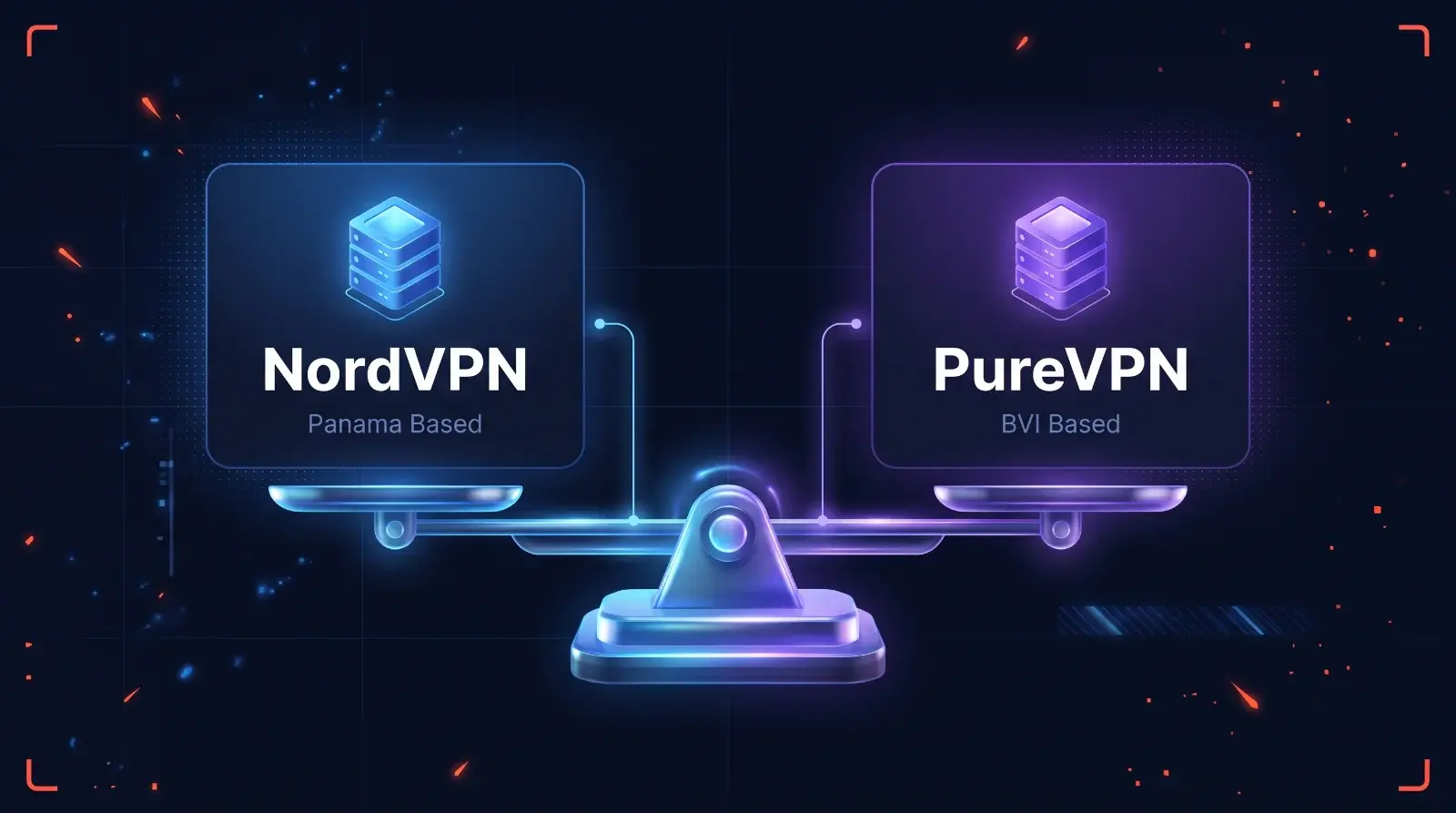
NordVPN is headquartered in Panama, a country with no mandatory data retention laws and no affiliation with the Five Eyes intelligence-sharing alliance. To prove they do not track user activity, NordVPN regularly hires independent firms like PricewaterhouseCoopers (PwC) to audit their systems. They have consistently passed these rigorous no-logs audits. Additionally, they utilize RAM-only servers, meaning every piece of data is completely wiped the moment the server restarts.
PureVPN previously faced controversy years ago regarding data logging while operating out of Hong Kong. However, they completely overhauled their entire business model. They relocated their headquarters to the British Virgin Islands, another privacy-friendly jurisdiction. More importantly, PureVPN became the first major provider to implement an "Always-On" audit policy through KPMG, meaning auditors can conduct surprise inspections of their server infrastructure at any time without warning. This unprecedented level of transparency has successfully restored their reputation in the cybersecurity community.
Pricing, Affiliate Deals, and Overall Value
Pricing is where the NordVPN vs PureVPN debate shifts dramatically. Both companies offer significantly cheaper rates if you commit to a two-year plan rather than paying month-to-month.
NordVPN positions itself as a premium service. According to their official pricing page at the time of writing, a standard two-year plan usually hovers around $3.00 to $4.00 per month. While this is slightly more expensive than budget providers, you are paying for the proprietary NordLynx protocol, specialized obfuscated servers, and built-in malware blocking features.
PureVPN aggressively targets the budget market. If you lock into their longest promotional terms, you can often secure their service for under $2.00 per month. This massive discount makes PureVPN incredibly attractive for students or casual users who just want basic encryption without paying a premium for cutting-edge speed technology. Furthermore, both providers offer around a 30-day money-back guarantee, allowing you to test the service risk-free.
Which one should you pick?
- If you want the absolute fastest speeds and flawless Netflix unblocking, choose NordVPN.
- If you need basic, audited security on a strict budget, choose PureVPN.
Common Mistakes When Choosing a VPN
Consumers often waste money on subscription services because they misunderstand how the technology actually functions.
- ✓ Ignoring Renewal Rates: Most VPNs advertise massive 70% or 80% discounts for your first billing cycle. You must read the fine print. When your initial two-year term ends, the software will automatically renew at the standard, significantly higher retail price. Set a calendar reminder to evaluate your subscription before the renewal hits.
- ✓ Assuming Total Anonymity: A VPN hides your IP address and encrypts your traffic, but it does not make you a ghost. If you log into your personal Facebook or Google account while connected to a VPN, those companies still know exactly who you are based on your account credentials.
- ✓ Using Free Providers: Operating thousands of secure servers costs millions of dollars. If a provider is not charging you a subscription fee, they are making money by tracking your browsing habits and selling that data to third-party marketing agencies. Always stick to paid, audited services.
Pro Tip: To get the best speeds, always use the "Quick Connect" feature in your VPN app. This automatically routes your traffic to the server physically closest to your actual location that has the lowest server load.
The Bottom Line: Which VPN Should You Choose?
Our final verdict in the NordVPN vs PureVPN debate comes down to performance versus price. NordVPN is unequivocally the superior technological product. Its Panama jurisdiction, RAM-only servers, and blazing-fast NordLynx protocol make it the ultimate choice for Americans who want absolute peace of mind and frustration-free streaming. PureVPN, on the other hand, is an excellent budget alternative. Their relocation to the British Virgin Islands and commitment to surprise third-party audits prove they take privacy seriously. If you have the extra few dollars a month, NordVPN is the better investment, but PureVPN will handle basic security tasks perfectly well for a fraction of the cost.
Ready to secure your internet connection? Check current pricing and claim your discount on NordVPN's official site, or explore the budget-friendly options on PureVPN's official site.
FAQ
Q1: Is NordVPN faster than PureVPN?
A1: Yes, in most real-world applications, NordVPN delivers faster and more consistent download speeds. This is primarily due to its proprietary NordLynx protocol, which is optimized to reduce latency and maximize bandwidth far better than older encryption methods.
Q2: Does PureVPN keep logs of my activity?
A2: No, PureVPN operates under a strict no-logs policy. They verify this claim through an "Always-On" audit structure, allowing independent security firms like KPMG to conduct surprise inspections of their server infrastructure at any time to ensure no identifiable user data is stored.
Q3: Can I use these VPNs on my smartphone and television?
A3: Yes, both providers offer dedicated applications for Windows, Mac, iOS, and Android devices. Additionally, they provide apps for popular smart TVs and streaming devices like the Amazon Fire Stick, allowing you to protect your entire household network.
Q4: Why do VPN prices increase after the first term?
A4: The heavily discounted prices advertised on official websites are promotional rates designed to acquire new customers. Once your initial term (usually one or two years) expires, the subscription automatically renews at the standard retail rate. You can easily turn off auto-renewal in your account settings.
Q5: Is it legal to use a VPN in the United States?
A5: Yes, using a Virtual Private Network is 100% legal in the United States and most democratic nations. Millions of Americans use them daily for remote corporate work, securing public Wi-Fi connections, and preventing internet service providers from monetizing their browsing data.
How We Researched This & Why Trust Us: We independently evaluated the documented protocols, server infrastructures, and independent audit reports provided by both Nord Security and GZ Systems Ltd. GoTrendWave focuses on factual comparisons to help readers make secure, informed decisions regarding their digital privacy. Information is accurate based on official company policies at the time of writing.
Comments (0)
No comments yet. Be the first!
Leave a Comment